OptiVax: Optimizing Vaccination Decisions for Polish Broilers
Smarter Vaccination: A New Decision Support Tool for Polish Broiler Producers
Poland stands as Europe’s largest producer of broiler chickens, yet the industry faces a persistent challenge: endemic viral diseases. Infectious Bursal Disease (IBDV), Avian Infectious Bronchitis (IBV), and Avian Metapneumovirus (aMPV) circulate within populations, demanding precise management.
While vaccination is the primary line of defense, producers often lack real-time information on which specific virus variants are circulating in their region. Without this data, making cost-effective decisions on vaccination protocols is a gamble. To address this, EpiMundi (formerly Ausvet Europe) and SLW Biolab have collaborated to develop a prototype decision support tool specifically for the Polish market.
How the Tool Works
The tool was designed with two primary goals to support farm health technicians and veterinarians:
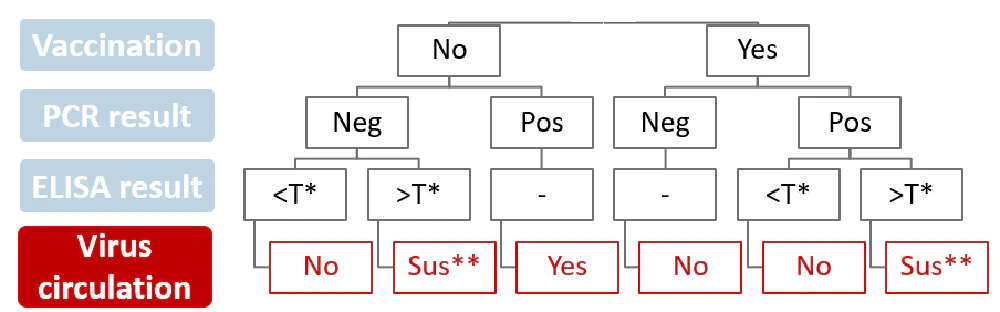
- Diagnosis Support: It helps determine if a virus has circulated on a specific farm. By combining virology results, serology data, and vaccination history, the tool utilizes a decision tree (designed in partnership with GD/UU) to interpret complex health data.
- Regional Intelligence: It provides anonymized, aggregated data on disease strains circulating in the immediate vicinity. This allows veterinarians to select vaccination protocols that match the actual local threat level rather than relying on generic national trends.
Developed by the Industry, For the Industry
Unlike off-the-shelf software, this tool was co-constructed with Polish stakeholders. The development process moved from initial interviews with integrators to a clickable Figma prototype, allowing future users to test the concept before full technical development began.
In Spring 2025, the team conducted a series of evaluation meetings with two distinct groups: independent veterinary practitioners and semi-integrated companies. The feedback highlighted that while both groups found the tool highly useful, their needs differed significantly:
- Integrated Companies viewed the tool as an internal workflow asset. They expressed a desire for features that track historical data (such as vaccination logs) and alert systems for new local outbreaks. Since they own their data, they were less concerned with external privacy but focused on internal efficiency.
- Independent Veterinarians operated in a more competitive environment. For them, the ability to see regional risks was valuable, but data privacy was paramount. Discussions revealed a preference for a fixed-radius view (e.g., seeing outbreaks within 50km) rather than complex algorithms, ensuring they could benefit from shared intelligence without compromising client confidentiality.
The Path Forward
The evaluations confirmed that the prototype effectively meets the technical capacities of Polish stakeholders. However, a key takeaway from the consultations was the need for automation—stakeholders want to minimize manual data entry by building direct data flows from labs to the tool.
As the researchers developing this solution are not affiliated with public institutions, the tool’s long-term sustainability relies on industry investment. The project is now moving into a business planning phase to identify partners willing to invest in a solution that transforms raw lab data into actionable health intelligence.