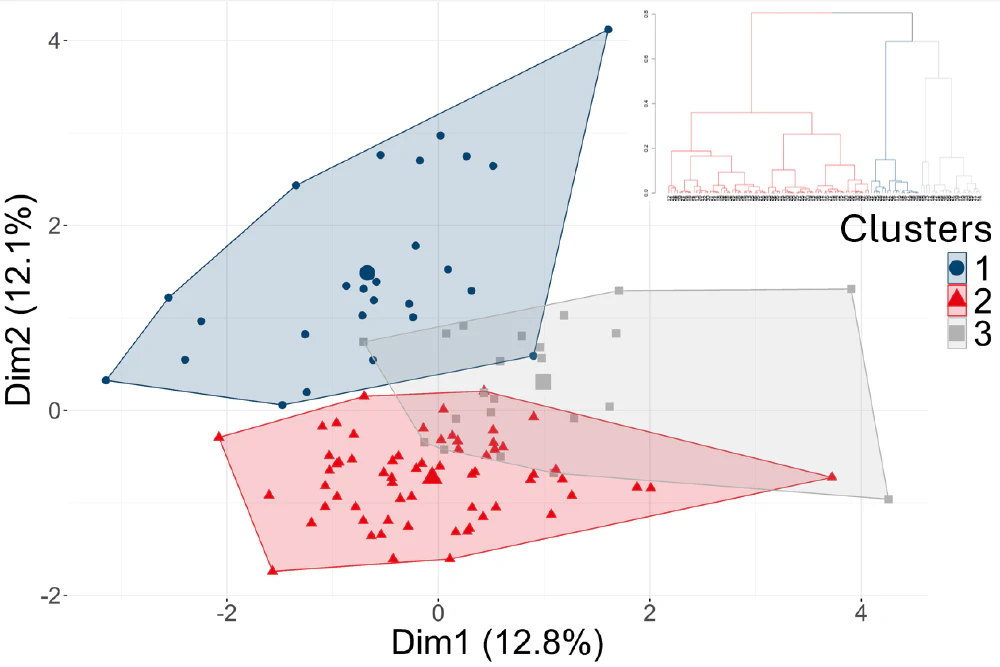
Integrated data for flock profiling
Turning Data into Profit: Unlocking Hidden Health Insights in Broiler Flocks
Are your farm records gathering dust, or are they working for you?
In the competitive world of broiler production, efficiency is everything. While producers routinely collect data on weight, mortality, and feed conversion, this information is often compartmentalized—kept separate from the veterinary lab results that come later.
A recent study from the Polish broiler sector has demonstrated that integrating these two data sources—farm performance records and veterinary screening results—can reveal powerful patterns about flock health that might otherwise go unnoticed. By analyzing 115 flocks across Poland, researchers identified distinct “flock profiles” that connect specific diseases to production outcomes, offering producers a roadmap to better management.
The Three Flock Profiles: Which One is Yours?
The study analyzed flocks using a “screening program” at the end of the production cycle, looking at everything from daily growth to bacterial cultures. The analysis revealed three distinct types of flocks, specific to the farm under study. Identifying and recognizing thespecific profiles in your own production system can help you identify specific threats on your farms.
1. The High Performers (But Watch the Legs)
These flocks achieved the gold standard: low Feed Conversion Rates (FCR) and high efficiency scores (EPEF).
The Good: These birds reached slaughter weight efficiently with generally better health.
The Warning: Even these top-tier flocks weren’t perfect. They showed a significantly higher rate of femoral head necrosis (leg problems). This suggests that as birds grow heavier and faster, leg health and bacterial issues like Staphylococcus become the primary welfare challenge, even when performance looks perfect on paper.
2. The Late-Cycle Strugglers
These flocks were kept longer but performed worse, with higher FCR and mortality.
The Culprits: The study found a strong link between these struggling flocks and two specific pathogens: Coccidiosis (Eimeria) and Avian Metapneumovirus (aMPV).
The Takeaway: If your birds are stalling out late in the cycle, it may not just be management fatigue. There is likely a silent circulation of respiratory viruses or parasitic challenges eating into your profits days before slaughter.
3. The “Early Cull” Flocks
These flocks were characterized by being slaughtered younger and lighter than average, often due to visible health issues.
The Signs: High condemnation rates at the slaughterhouse and internal “fibrinous lesions” (scarring on the liver and heart).
The Cause: This profile was strongly associated with E. coli infections (Colibacillosis).
The Context: These flocks were often located in high-density poultry regions, suggesting that when farm density is high, biosecurity becomes the single most critical factor in preventing bacterial outbreaks that force early slaughter.
Why This Matters for Your Farm
The power of this study wasn’t just in diagnosing diseases—it was in context.
Don’t Ignore the “Healthy” Flocks: The study showed that “High Performing” flocks often hide leg health issues. Proactive management of litter quality and stock density is essential, even when the FCR looks good.
Rethink Late Mortality: If you see performance drops in older birds, investigate aMPV. It is becoming an increasingly burdensome pathogen in European production, particularly at the end of the cycle.
Data is Your Best Tool: The researchers concluded that the most valuable asset producers have is the data they already generate. By combining your production charts with slaughter reports and vet diagnostics, you can move from reacting to outbreaks to predicting them.