
Risk-based Disease Surveillance: A Manual for Veterinarians
Authors: A. Cameron, F. Njeumi, D. Chibeu and T. Martin | Published: 2004 | Publisher: Food and Agriculture Organisation of the United Nations (FAO)
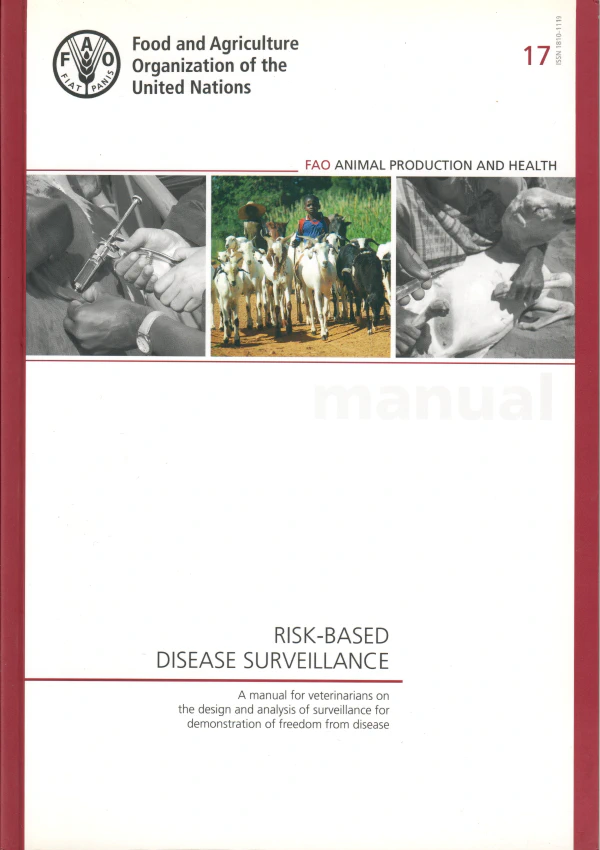
In an era of intensifying production and global movement of animals, traditional surveillance methods are often resource-intensive and inefficient. This manual introduces risk-based surveillance as a vital alternative, allowing veterinary authorities to quantify the sensitivity of complex surveillance systems by targeting high-risk groups. It serves as an essential resource for understanding how to combine evidence from diverse sources—such as abattoir inspections, passive reporting, and structured surveys—to scientifically demonstrate freedom from disease.
The manual covers the entire surveillance lifecycle, from defining design prevalence and quantifying risk factors to incorporating historical data and accounting for clustering. With a focus on practical implementation, it includes detailed instructions on building scenario trees and using the “Freedom” tools available at EpiMundi’s ShinyEpiTools to analyze data, ensuring users can rigorously assess the quality of their surveillance systems and make informed decisions regarding animal health management.
Cameron, Angus, et al. Risk-based Disease Surveillance: A Manual for Veterinarians on the Design and Analysis of Surveillance for Demonstration of Freedom from Disease. Food and Agriculture Organization of the United Nations, 2014.